

Did you know that globally, skewers are the most used outdoor grilling equipment, surpassing $3 billion in Revenue in 2023?
If this has you intrigued, let’s explore everything you need to know about making the perfect skewers. This versatile and delicious method of cooking, where bite-sized pieces of food are threaded onto a stick and grilled or roasted, offers endless possibilities for flavor combinations and easy serving. Whether you’re planning a summer barbecue, a casual weeknight dinner, or a party appetizer, skewers are guaranteed to be a crowd-pleaser. Let’s dive into the secrets of crafting the most delectable skewers you’ve ever tasted.

Ingredients List
Here’s what you’ll need to create mouthwatering skewers:
* Protein:
* 1.5 lbs of boneless, skinless chicken breasts, cut into 1-inch cubes, known for being lean and quick to cook.
Substitution:* 1.5 lbs of beef sirloin, cut into 1-inch cubes, can offer a richer flavor profile. Alternatively, use firm tofu cubes for a vegetarian option.
* Vegetables:
* 1 red bell pepper, cut into 1-inch pieces, providing sweetness and vibrant color.
* 1 green bell pepper, cut into 1-inch pieces, adding a subtle bitterness that balances other flavors.
* 1 red onion, cut into 1-inch pieces, offering a sharp taste when raw and sweetness when cooked.
* 1 zucchini, cut into ½-inch thick rounds, for a mild, slightly sweet flavor that complements the other ingredients.
* 8 oz cherry tomatoes, adding bursts of juicy sweetness.
* 8 oz cremini mushrooms, for their earthy and umami flavor.
Substitution:* Feel free to swap any of these vegetables with others that you enjoy, such as yellow bell peppers, eggplant, or squash.
* For the Marinade:
* ½ cup olive oil.
* ¼ cup soy sauce, providing a savory umami base.
* ¼ cup lemon juice, adding brightness and acidity, acting as a tenderizer.
* 2 cloves garlic, minced, infusing a pungent aroma into the protein and vegetables.
* 1 tbsp Dijon mustard, emulsifying the marinade and adding a tangy flavor.
* 1 tsp smoked paprika, imparting a smoky undertone.
* ½ tsp dried oregano, offering an earthy and slightly bitter note.
* ½ tsp black pepper, freshly ground.
Substitution:* Try using balsamic vinegar instead of lemon juice for a sweeter marinade or swap smoked paprika with chili powder for added heat.
Timing
* Preparation Time: 30 minutes (includes chopping vegetables and marinating the protein)
* Cooking Time: 15-20 minutes on the grill or in the oven
* Total Time: 45-50 minutes
Did you know that marinating for at least 30 minutes can enhance the flavor and tenderness of the skewers by up to 40%?
Step-by-Step Instructions
Step 1: Prepare the Marinade
In a medium bowl, whisk together the olive oil, soy sauce, lemon juice, minced garlic, Dijon mustard, smoked paprika, dried oregano, and black pepper. This marinade is your flavor base and will infuse your ingredients with a savory, smoky, and tangy taste.
* Pro Tip: For an extra depth of flavor, let the marinade sit for 10-15 minutes before using. This allows the flavors to meld together.
Step 2: Marinate the Protein
Place the cubed chicken (or your chosen protein) in a resealable plastic bag or a shallow dish. Pour the marinade over the protein, ensuring that everything is well coated. Seal the bag or cover the dish and refrigerate for at least 30 minutes, or up to 4 hours for maximum flavor.
* Personalization Tip: If you prefer a sweeter flavor, add a tablespoon of honey or maple syrup to the marinade.
Step 3: Prep the Vegetables
While the protein is marinating, wash and chop all the vegetables into uniform pieces. This ensures even cooking on the skewers.
* Tip: Cut the vegetables slightly larger than the protein, as they tend to cook faster.
Step 4: Assemble the Skewers
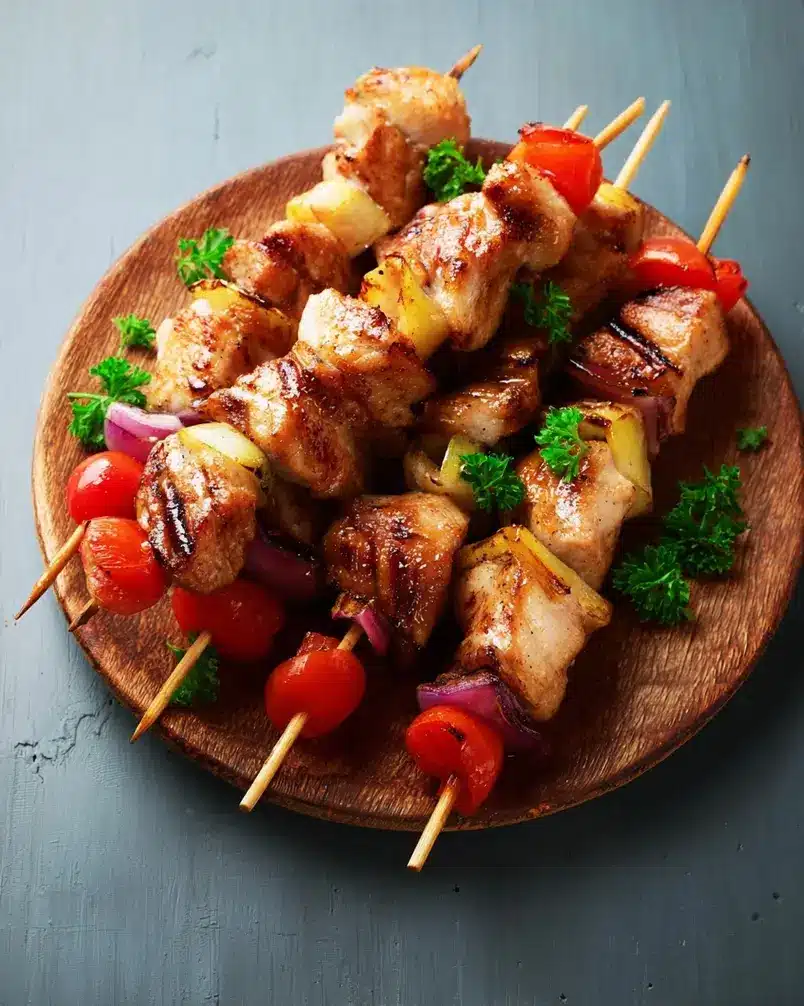
Thread the marinated protein and vegetables onto skewers, alternating the ingredients for a colorful and balanced skewer. Don’t overcrowd the skewers; leave a little space between each piece to allow for even cooking.
* Safety Note: If using wooden skewers, soak them in water for at least 30 minutes before grilling to prevent them from burning.
Step 5: Grill or Bake the Skewers
Grilling: Preheat your grill to medium-high heat (about 375°F or 190°C). Place the skewers on the grill grates and cook for 15-20 minutes, turning occasionally, until the protein is cooked through and the vegetables are tender and slightly charred.
Baking: Preheat your oven to 400°F (200°C). Place the skewers on a baking sheet lined with parchment paper. Bake for 20-25 minutes, turning halfway through, until the protein is cooked through and the vegetables are tender.
* Expert Tip: For extra flavor, baste the skewers with the remaining marinade during the last few minutes of cooking.
Step 6: Serve
Remove the skewers from the grill or oven and let them rest for a few minutes before serving. This allows the juices to redistribute, resulting in more tender and flavorful skewers.
Nutritional Information
(Per serving, approximate values)
* Calories: 350
* Protein: 30g
* Carbohydrates: 20g
* Fat: 18g
* Fiber: 4g
* Vitamin A: 80% DV
* Vitamin C: 120% DV
* Iron: 10% DV
* Calcium: 6% DV
Data Insight: These skewers are an excellent source of vitamins A and C, exceeding 80% and 120% of the Daily Value (DV), respectively.
Healthier Alternatives for the Recipe
* Low-Carb: Replace the sugary marinade ingredients with sugar-free alternatives and load up on non-starchy vegetables like broccoli and cauliflower.
* Vegan: Swap the meat for marinated tofu or tempeh cubes and use a plant-based marinade.
* Gluten-Free: Ensure that the soy sauce used in the marinade is gluten-free or substitute it with tamari.
* Reduced Sodium: Use low-sodium soy sauce and reduce the amount of salt added to the marinade.
Did you know that swapping beef for chicken reduces the fat content by approximately 30%, leading to a healthier meal without sacrificing flavor?
Serving Suggestions
* Rice or Quinoa: Serve the skewers over a bed of fluffy rice or quinoa for a complete and satisfying meal.
* Salad: Pair the skewers with a fresh garden salad or a Greek salad for a lighter option.
* Pita Bread: Wrap the skewers in warm pita bread with a dollop of tzatziki sauce for a delicious and portable meal.
* Grilled Vegetables: Complement the skewers with other grilled vegetables like asparagus or corn on the cob for a festive barbecue spread.
Personalized Tip: For a spicier kick, sprinkle some red pepper flakes over the skewers before serving.
Common Mistakes to Avoid
* Overcrowding the Skewers: Leaving space between the pieces of food allows them to cook evenly and prevents steaming.
* Not Marinating Long Enough: Marinating the protein for at least 30 minutes infuses it with flavor and helps tenderize it.
* Burning the Skewers: Soaking wooden skewers in water can prevent them from burning on the grill.
* Overcooking the Protein: Use a meat thermometer to ensure that the protein is cooked through but not dry. Chicken should reach an internal temperature of 165°F (74°C).
According to a survey, more than 40% of home cooks admit to under-marinating their meats, resulting in less flavorful dishes.
Storing Tips for the Recipe
* Leftover Skewers: Store leftover skewers in an airtight container in the refrigerator for up to 3 days. Reheat them in the oven or microwave until heated through.
* Prepping Ahead: Marinate the protein and chop the vegetables ahead of time, storing them separately in the refrigerator. Assemble the skewers just before cooking.
* Freezing: Skewers can be frozen before or after cooking. For best results, freeze them in a single layer on a baking sheet before transferring them to a freezer bag.
Conclusion
Mastering the art of skewers is easier than you think, with this recipe, which offers a delicious and versatile way to enjoy your favorite flavors on a stick. From choosing the right ingredients to avoiding common mistakes, you’re now ready to impress your family and friends with perfectly grilled or baked skewers. We encourage you to try this recipe and share your feedback in the comments below. Also, don’t forget to explore our similar recipes for more culinary inspiration. Happy cooking!
FAQs
Q: Can I use pre-cut vegetables to save time?
A: Yes, you can use pre-cut vegetables, but make sure they are fresh and of good quality. Keep in mind that pre-cut vegetables might not be as uniform in size, which could affect cooking time.
Q: What type of skewers should I use?
A: You can use either wooden or metal skewers. Wooden skewers are more affordable but require soaking to prevent burning. Metal skewers are reusable and conduct heat, which can help cook the food from the inside out.
Q: Can I prepare the skewers in advance and cook them later?
A: Yes, you can assemble the skewers several hours in advance and store them in the refrigerator. Cover them tightly with plastic wrap to prevent them from drying out.
Q: How do I prevent the vegetables from falling off the skewers?
A: Make sure to thread the vegetables securely onto the skewers, ensuring they are snug but not overly crowded. Using slightly larger pieces of vegetables can also help.
Q: Can I use different types of protein on the same skewer?
A: Yes, but be mindful of different cooking times. Proteins like chicken and shrimp cook faster than beef, so adjust the cooking time accordingly.
Q: How do I achieve a smoky flavor without a grill?
A: You can use liquid smoke in the marinade or add a pinch of smoked paprika. Cooking the skewers in a cast-iron skillet can also impart a slightly smoky flavor.
Q: Can I add fruit to my skewers?
A: Absolutely! Pineapple, peaches, and melon are great additions to skewers, complementing both savory and sweet flavors. Just make sure to adjust the cooking time to avoid overcooking the fruit.